

São Paulo, Brazil – It was 175 kilometers off the coast of the eastern state of Amapá, beneath almost three kilometers of water, that Brazilian state oil giant Petrobras made a discovery President Luiz Inácio Lula da Silva has described as a “passport to the future.”
On August 14, rock samples and electrical logging indicated the presence of hydrocarbons in the Atlantic Ocean, some 500km (310 miles) from the mouth of the Amazon River.
The discovery took place in the Foz do Amazonas Basin in Brazil’s Equatorial Margin, a vast offshore region stretching along the country’s northern and northeastern coast that the Brazilian government regards as one of the country’s last major unexplored petroleum frontiers.
While much remains unknown about the reserve, the news has sparked a vigorous debate in Brazil spanning the economy, energy security, and environment.
Petrobras is yet to estimate the size of the reserve, how much of the oil could ultimately be recovered, and whether developing it would be commercially viable.
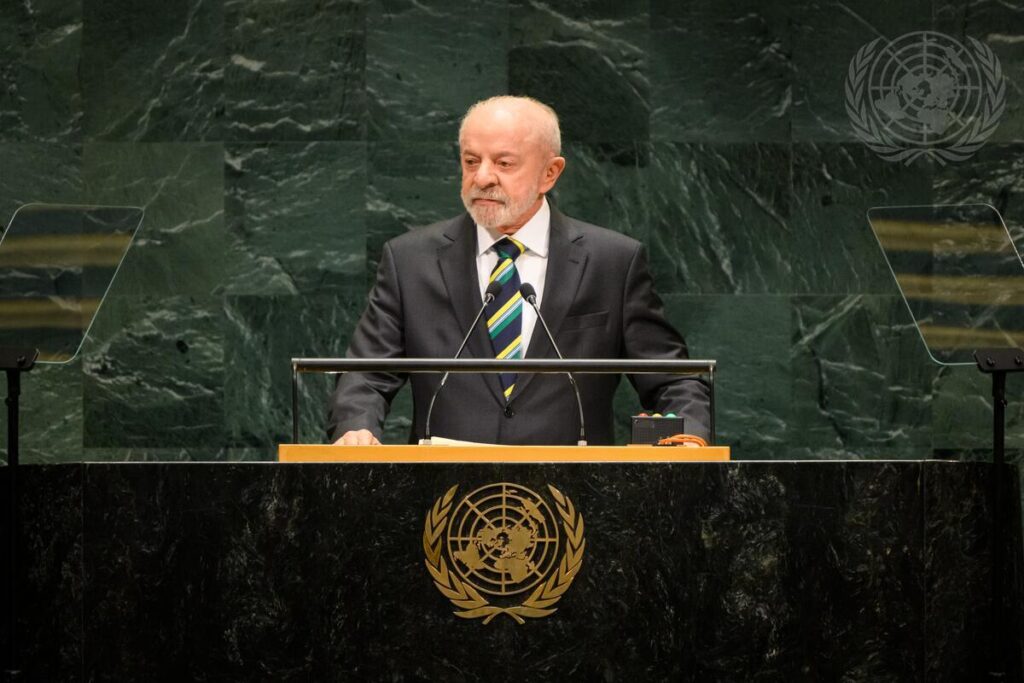
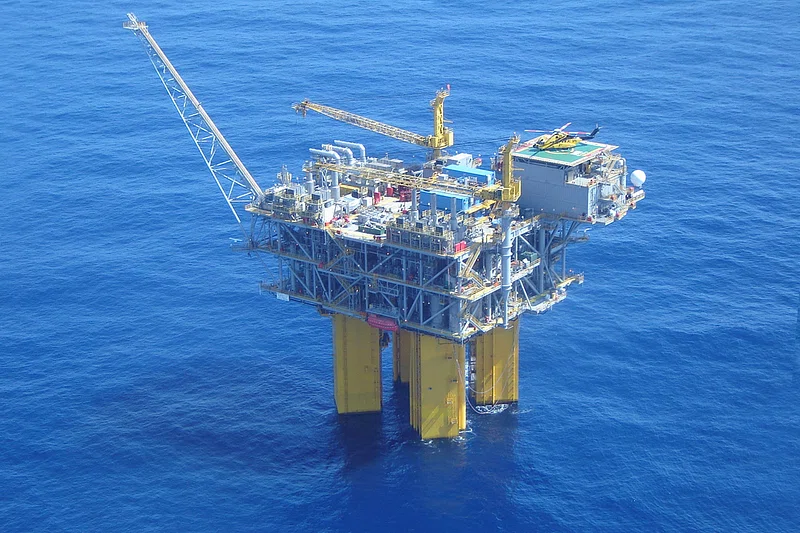
But those unknowns did little to temper the political celebration in Brazil. Three days after the announcement, Lula traveled to Oiapoque and boarded the NS-42 drillship, which is drilling the Morpho well.
“When [Petrobras chief executive Magda Chambriard] told me that oil had been found, I felt the same sensation and the same emotion I felt when José Sérgio Gabrielli, in 2007, and my dear friend Estrella came into my office to announce that Petrobras had discovered the pre-salt,” Lula said, referring to the vast offshore oil reserves found beneath a thick layer of salt in the Atlantic Ocean.
Discovered in the 2000s, these fields transformed Brazil into a major oil producer and became a symbol of the country’s energy ambitions during Lula’s first term in office.
He also recounted asking Chambriard about the quality of the crude. “I asked Magda, ‘Is it Brent?’ She said, ‘No, it is more than Brent. It is Brent with honors.’”
For now, the excitement surrounding the discovery is far outpacing any tangible economic opportunities. Petrobras still needs to determine how much oil is there and whether enough of it can be commercially recovered. According to estimates reported by Reuters, even under a favorable scenario, production would be unlikely to begin before 2033.
Environmental concerns
Despite exploration being in the early stages, the discovery has unleashed an environmental debate.
“The greatest challenge raised during the licensing processes in the region is the strength of the ocean currents, which are considered very intense,” João Victor Marques Cardoso, a researcher at FGV Energia, told Latin America Reports.
Those conditions, he said, make planning for an accident more demanding. In the event of a spill, Petrobras would have to contain and recover the oil, protect vulnerable areas and clean affected sites.
The oil giant says its models indicate that leaks at the drilling site would be carried toward the open ocean rather than the Brazilian coast. During the licensing process, the company submitted studies of currents and established wildlife response facilities in Oiapoque and Belém.
“The oil dispersion modeling presented by Petrobras shows that the oil does not reach the coast and instead moves out to sea,” Cardoso said.
But the spill models remain among the most closely scrutinized parts of the project. They can estimate how oil is likely to move under a range of conditions, but they cannot predict the course of a future accident with absolute certainty.
The combination of strong currents, the well’s distance from shore and the environmental sensitivity of the region led the Brazilian Institute of the Environment and Renewable Natural Resources (Ibama) to require Petrobras to demonstrate its disaster response capacity before drilling was authorized.
In May 2023, several months into Lula’s third term, Ibama rejected Petrobras’ request for a drilling license. The company appealed and expanded the emergency response structure proposed for the operation.
In August 2025, more than 400 people took part in a pre-operational assessment designed to test Petrobras’ ability to respond to an accident under Ibama’s supervision. Helicopters, large vessels, wildlife rescue teams and the NS-42 drillship were deployed for the exercise.
“It is important to point out that, despite the uncertainties regarding the behavior of oil in the event of a spill, Petrobras made available, for the drilling of one exploratory well, the largest response structure in the country,” he said.
According to Cardoso, the monetary resources mobilized for a single well in the Foz do Amazonas Basin are equivalent to twice those deployed in the Campos and Santos basins for hundreds of wells when vessels dedicated to wildlife rescue and response are taken into account.
Ibama eventually granted a license on October 20, 2025, allowing Petrobras to drill a single exploratory well but did not authorize commercial production.
But concerns remain. Scientists and environmental groups have also focused on the Great Amazon Reef System, a large biogenic formation beneath waters influenced by the Amazon River plume. Its composition is more complicated than the label “coral reef,” often used to describe it, Cardoso suggests.
Closer to shore are Amapá’s extensive mangroves, among the largest and best preserved in Brazil. Coastal communities also depend directly on the region’s marine resources. Cardoso pointed to artisanal fishers, quilombola communities and coastal Indigenous peoples as groups that could be affected by an accident or by changes associated with oil exploration itself, including increased vessel and aircraft traffic and underwater noise.
Oil for the 2030s
While Brazil currently produces more oil than it consumes, its energy security is already at risk in the decade to come.
The pre-salt now accounts for most Brazilian production and has changed the country’s place in global oil markets. But as those fields mature, Petrobras and the government say that a lack of discoveries could lead to declining production during the 2030s. “The main motivation for opening a new exploratory frontier in Brazil concerns the replacement of national oil reserves and the guarantee of energy security,” Cardoso said.
“With the pre-salt expected to reach peak production in 2034 and an average period of seven to 10 years for an oil discovery to become an active production system, it is believed that the estimated potential of the Equatorial Margin could help maintain Brazilian production levels over the coming decades,” Cardoso said.
Featured image description: The Petrobras logo on the facade of Edise, Petrobras’ headquarters building in Rio de Janeiro.
Featured image credit: André Motta de Souza / Agência Petrobras.