
Brazilian ex-president Jair Bolsonaro has denied involvement in the use of his likeness in an AI-generated video which appeared at the launch of his son Flávio Bolsonaro’s presidential campaign on Saturday.
Brazil’s Supreme Court is investigating whether the case breaches a law banning the jailed former leader from using social media, giving interviews or otherwise communicating publicly.
The scandal comes amid Brazil’s heated presidential race in which Flávio Bolsonaro is running in the place of his father against incumbent Luiz Inácio Lula da Silva.
Bolsonaro is serving a 27-year prison sentence after being convicted of conspiring to overturn the results of Brazil’s 2022 presidential election, which he lost to Lula. In March, the Supreme Court allowed him to serve the sentence under humanitarian house arrest because of his health, but imposed strict conditions on his public profile.
The giant AI avatar projected at the Liberal Party (Partido Liberal) convention on Saturday declared, “This is a simulation of my image and my voice using artificial intelligence,” before claiming that the former president had been “imprisoned and silenced by an unjust and arbitrary decision,” adding that “no prison will silence the feeling of hope we have stirred.”
The appearance prompted an immediate legal challenge from opposition parties before Brazil’s Superior Electoral Court (TSE). In its submission to the court, Flávio Bolsonaro’s campaign argued that the video did not constitute an illegal deepfake because it openly disclosed its use of artificial intelligence and therefore could not be considered deceptive.
Jair Bolsonaro submitted a response to the Supreme Court denying that he had authorised the use of his image or voice in the AI-generated video.
The video emerged just weeks after Supreme Court Justice Alexandre de Moraes tightened restrictions on Bolsonaro’s communications. On July 13, the justice barred Flávio Bolsonaro from visiting his father after the senator published a handwritten letter from the former president on social media; Moraes ruled that the incident violated restrictions preventing Bolsonaro from making public statements through third parties.
In a written order, the justice warned that any consent to the dissemination of the AI-generated video could constitute a “new and serious violation” of the conditions of Bolsonaro’s house arrest and justify revoking the humanitarian measure that allows him to serve his sentence at home.
The case has become an early test of Brazil’s rules governing artificial intelligence ahead of the country’s October presidential election.
Although the ex-president is barred from public communication, his son has emerged as the leading figure seeking to consolidate the former president’s conservative support ahead of the vote.
Meanwhile, the TSE is stepping up oversight of digital campaigning, requiring internet platforms to submit election compliance plans by August 16 outlining transparency measures, risk prevention strategies, and systems for monitoring online activity during the electoral process.
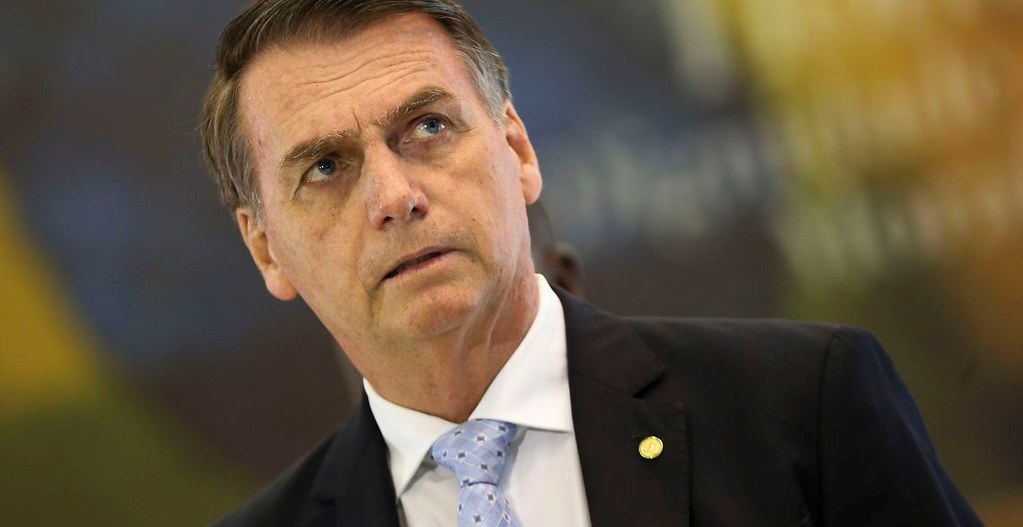
Featured image description: Jair Bolsonaro
Featured image credit: Jeso Carneiro via Flickr