
London, England – This Sunday, Brazilians across the world will vote in the first round of the presidential election.
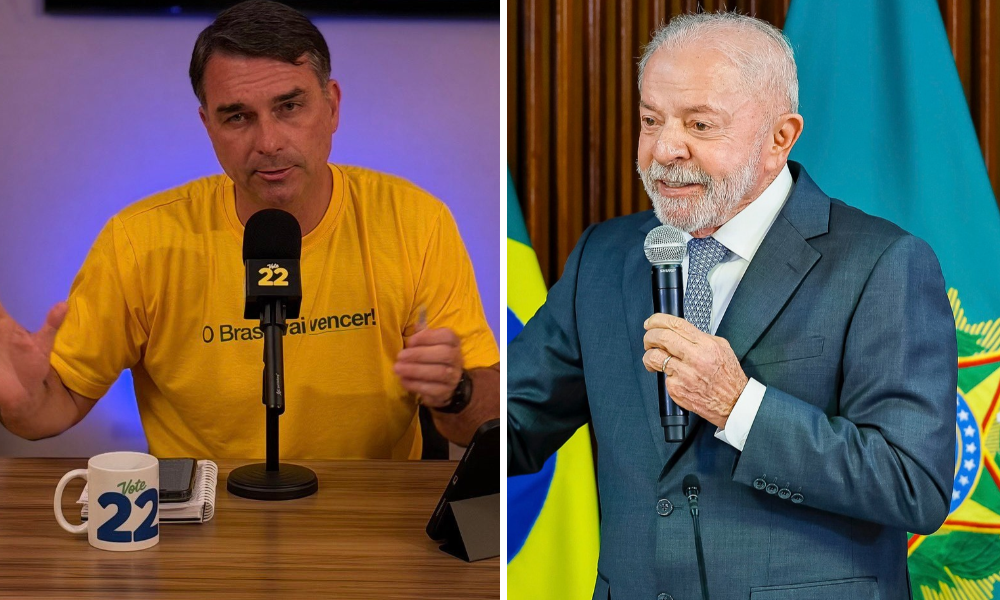
13 candidates are running, but the battle is really between President Luiz Inácio Lula da Silva, or “Lula” of the Worker’s Party (PT) and Flávio Bolsonaro of the Liberal Party (PL). Notably, Flávio is the son of ex-president Jair Bolsonaro, who is currently under house arrest for his involvement in a coup plot against Lula back in 2022.
Nearly one million Brazilians abroad in over 134 countries have registered to vote in the upcoming elections, according to Agencia Brasil.
These voters make up 0.5% of the vote, and the largest voter populations lie in the United States, Portugal, Japan, Canada, and Germany.
In most cases, voters must travel to the city with a Brazilian consulate, as postal voting is not offered. However, this year the elections have welcomed new voting cities so that Brazilians abroad do not always have to travel to the consulate. These include Hiroshima in Japan, Hamburg in Germany and Malden in Massachusetts.
Some overseas voting cities have been removed for 2026 because fewer than 30 eligible voters registered to take part in elections. These locations include Iquitos in Peru, Rivera in Uruguay, and Islamabad in Pakistan.
Election watch parties will be taking place all over the world this Sunday. One of these will be in New York, at Selva, a community space and bar. The venue says that it aims to gather “the Brazilian community and friends to watch the election results”, followed by music from a Brazilian DJ.
But not everybody will be watching the election results in a live music venue. Cierecruz, originally from Espírito Santo in southeastern Brazil but now living in London, told Latin America Reports that she can’t bear to watch Sunday’s elections.
Though she missed the deadline for registering to vote, Cierecruz said her heart lies with Lula, explaining that Jair Bolsonaro’s rule in Brazil was an incredibly difficult time for her family, and that when she went back to visit them during his presidency, she would “cry a lot”.
“I can’t possibly understand why people would want to vote for his son,” she said. “People in Brazil are poor and need social care,” she continued. Cierecruz does not believe that Flávio Bolsonaro will provide this.
But many Brazilian voters in the U.S. disagree with Cierecruz, leaning heavily towards Bolsonaro’s right-wing politics. According to Maxine L. Margolis, Professor Emerita of anthropology at the University of Florida, many of these voters have adopted conservative attitudes since they have accessed social mobility in the States.
Many others have not registered to vote, with some wholly uninterested in Sunday’s elections. Fabio, originally from Brazil but now working a Brazilian supermarket in London, told Latin America Reports that he won’t be voting on Sunday, since the elections don’t mean much to him. He has no plans to return to his native country. “I like life in England”, he said.
Tulio, from Aracaju, northeastern Brazil, now a resident of London for 7 years, expressed a similar opinion. “Sunday is my only day off,” he said, explaining that he would be spending time with his daughters instead of voting. He also has no plans to return to live in Brazil.
Lula has now run the country for a total of three presidential terms, but his presidencies have not been clear of scandal. In 2017, he was convicted of money laundering and corruption, landing him a 580-day sentence in prison, which was later nullified in 2021 by the Supreme Federal Court, which found bias in the case.
Flávio Bolsonaro is described as a far-right populist, following in the footsteps of his father and previous president, Jair Bolsonaro. His proposed policies include improving Brazil’s relationship with Israel, improving tax conditions for professionals, and bringing in spending cuts. The candidate for the Liberal Party has also expressed that he wishes to release his father from jail.
Only Brazilian citizens can vote on Sunday, but one in five are expected to abstain, as in 2022’s first round. If no candidate receives a majority vote, a runoff election will take place on 25 October.
Featured image description: Flavio Bolsonoro (L) and Luiz Inácio Lula da Silva (R).
Featured image credit: @FlavioBolsonaro and @LulaOficial via X.