

President Luiz Inácio Lula da Silva secured a strategic victory on November 23 as Brazil’s Congress approved a divisive fiscal adjustment bill.
The legislation is meant to bring the country’s accounts into balance through 2027 but has sparked fears of high taxes for businesses and caused suspicion among investors.
Meanwhile, some government allies claim it will hurt the poor and break campaign promises less than a month after Lula’s narrow reelection.
The fiscal adjustment bill was first passed in the Senate on November 18 with 69 votes for and 2 against after being delayed to allow for negotiations. Today, the Chamber of Deputies passed the bill with 353 votes for, 128 against, and 5 abstentions without making changes to the text from the Senate.
Most of Lula’s Workers’ Party (PT) caucus supported the bill, but two of its members continued to have objections and abstained from voting for it. Additionally, three members of the Socialism and Liberty Party (PSOL), a traditional ally of PT, also abstained. The bill is now expected to be signed into law by Lula.
The government is trying to frame the bill as middle ground, but some PT members remain skeptical. They claim it would hurt struggling households and is likely to break promises from Lula’s reelection campaign. On the other end of this tug-of-war, industrial sectors say the legislation puts additional stress on their cash flows, and investors are uncertain if it addresses the structural changes needed to rebalance the government’s accounts.
Brazil’s coffers are in a tight spot. The country’s gross public debt reached 82.9% of GDP, or R$11.1 trillion (approximately US$1.86 trillion), and the Central Bank recently pointed out that the debt-to-GDP ratio went up by 4.3 percentage points from the beginning of January to the end of September.
“The trajectory of public debt and high interest rates worries me; therefore, I reaffirm my commitment to fiscal responsibility, to enable sustainable social policies,” Lula said during a televised address on November 8.
The Senate report estimates savings from the adjustment will range from R$45.1 to R$56.1 billion, but private-sector estimates range from R$38.3 to R$49.6 billion. Among the reasons for business and investor suspicion is the fact that the Senate may be underestimating the cost of diesel subsidies as global fuel prices rise.
From 2027 to 2030, the bill would authorize additional spending limits. When spending restraints are triggered, the ceiling on spending growth above inflation would fall from 2.5% to 2% per year.
One of the contentious provisions in the bill allows the government to restrict companies from using accumulated tax credits when it imposes additional spending freezes, effectively forcing businesses to settle their taxes in cash. Tax credits related to systems that finance worker benefits and social programs would still be partially protected.
Abimaq, which represents machinery manufacturers, is one of the business associations opposing this provision and warned that delaying the use of tax credits would disrupt cash flows for many of its members.
Another concern is about funding for Brazil’s regional government. Under the bill, base transfers from the federal government to states and municipalities would halve from R$4 billion to R$2 billion.
Health funding is also a flashpoint, with private assessments estimating the public health system stands to lose as much as R$9 billion (US$1.51 billion) in funding as the bill excludes certain oil-related revenues from the health-spending calculation.
Despite the criticism, Lula says his government hopes the reforms will increase the country’s investment rate to more than 20% of GDP, in partnership with the private sector.
He hopes this will create conditions to cut interest rates, which were this month maintained at 13.75%, the highest globally in inflation-adjusted terms. In its decision, the Central Bank cited pressure on energy prices from Middle Eastern conflicts and domestic inflation trends.
Shortly before Congress voted on the bill, the dollar rose against the real to R$6, then fell to R$5.92 after it was passed. The Brazilian currency fell 16.53% since October 25, when Lula was reelected to his fourth term as president.
As disagreements over the bill spread publicly into social movements, the National Union of Students joined other organizations in calling for protests against the fiscal adjustments.
Still, major labor unions have declined to participate despite not fully supporting the legislation, suggesting that disagreement over the economic policy did not translate into a unified movement against Lula.
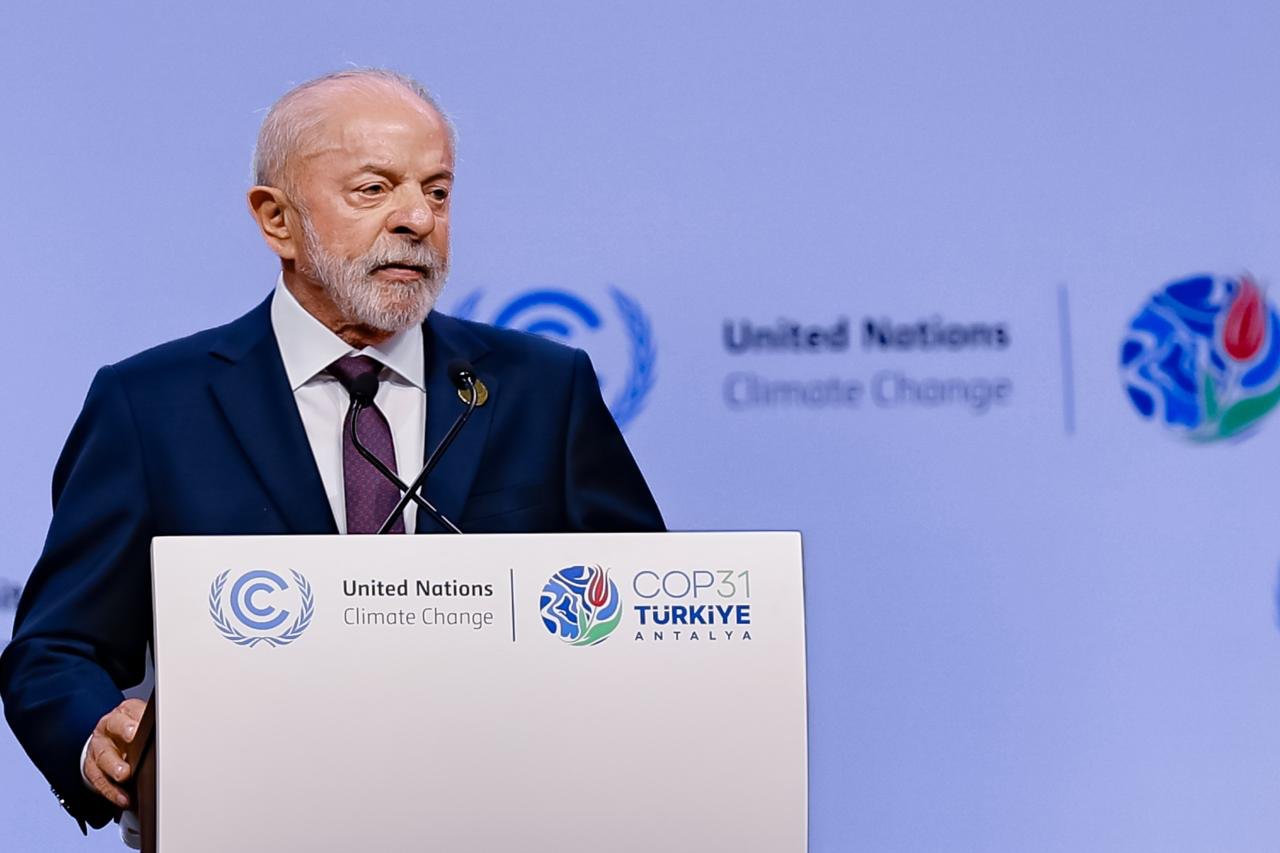
Featured image description: Lula pictured at this month’s COP31 summit.
Featured image credit: Ricardo Stuckert/Presidency of Brazil.