
Brazil is facing heightened pressure both internally and from the United States to designate criminal gangs operating in the country as foreign terrorist organizations (FTOs).
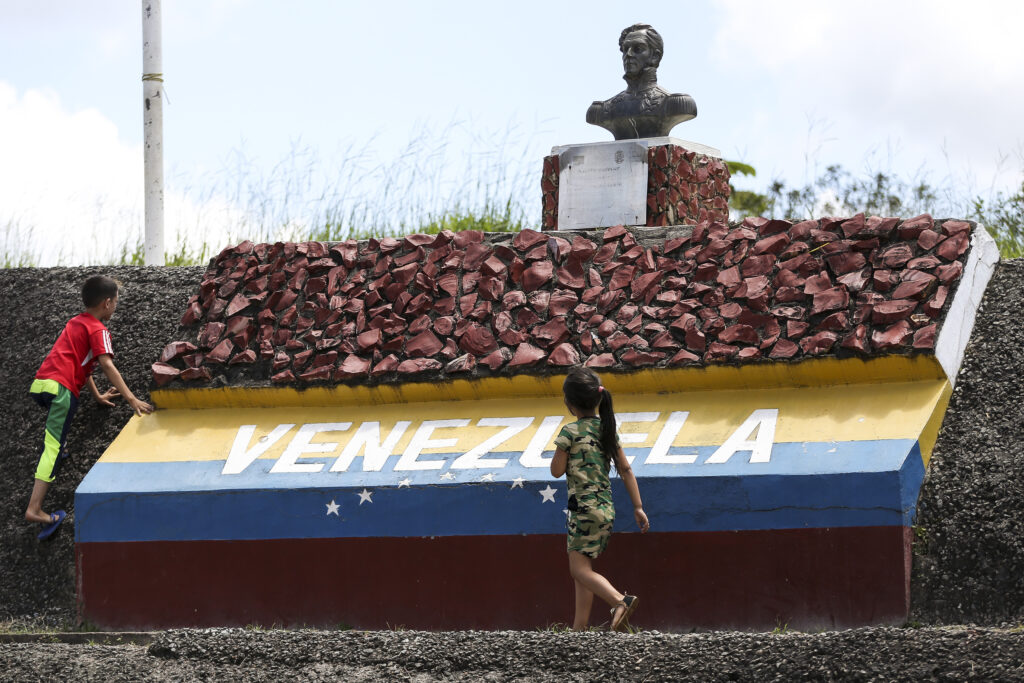
Foreign Minister Mauro Vieira spoke to U.S. Secretary of State Marco Rubio on March 8 and pushed back against the designation, arguing it could create precedents for military intervention similar to the recent American operations against Venezuela’s alleged drug trafficking networks.
The dispute intersects with Brazil’s own election year, where the designation could hand ammunition to right-wing candidates calling for harder security measures.
As of late, the country has managed to withstand U.S. pressure via legislative action. Brazil’s Anti-Terrorism Law defines terrorism as acts intended to provoke “social or generalized terror” on the basis of race, color, ethnicity or religion. Notably, it explicitly excludes profit-driven drug trafficking.
Deadly Rio de Janeiro raids: A precedent for U.S. pressure?
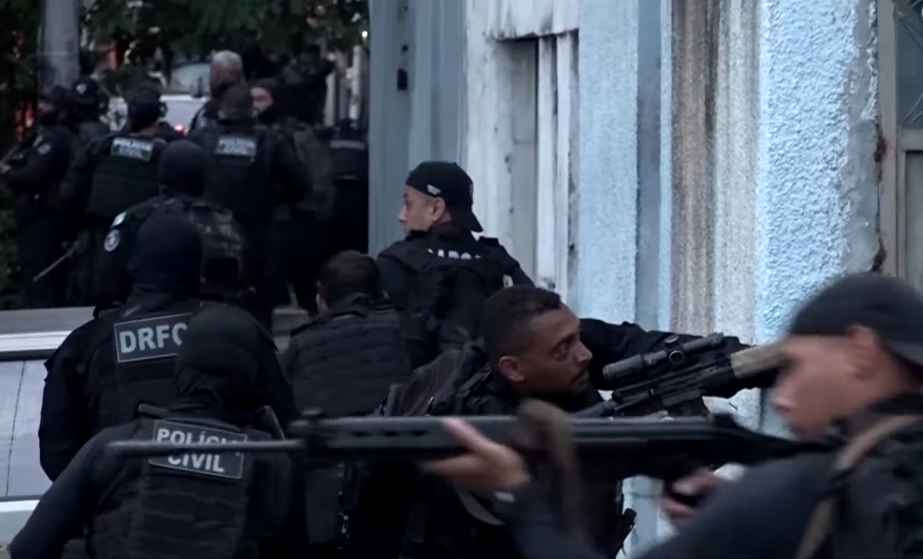
The October 28, 2025 raids in the northern Rio de Janeiro favelas resulted in 132 casualties, and were labeled as the deadliest in recent years. Meanwhile, they have also cast a long shadow over Brazil’s security capacity.
What was intended to be an operation against the leaders of the Comando Vermelho (CV) drug trafficking group ended in the slaughter of over 120 people including four police officers.
Governor Cláudio Castro of the Liberal Party, who instructed the police on the raid, argued that this form of hard-handed policy is needed to uproot organized crime in the city:
“This is how the Rio police are treated by criminals: with bombs dropped by drones. This is the scale of the challenge we face. This is not ordinary crime, but narco-terrorism,” said Castro.
While many agree that more can be done in the country to prevent the expansion of these groups, some challenge any theoretical benefit that FTO designations could prompt.
For one, Justice Minister Ricardo Lewandowski stood beside Rio’s governor a day following the strike: “Terrorism always involves an ideological element,” the minister said.
Criminal gangs, on the other hand, “commit offenses already defined in the Penal Code,” he told Agencia Brasil.
The real crisis of organized crime
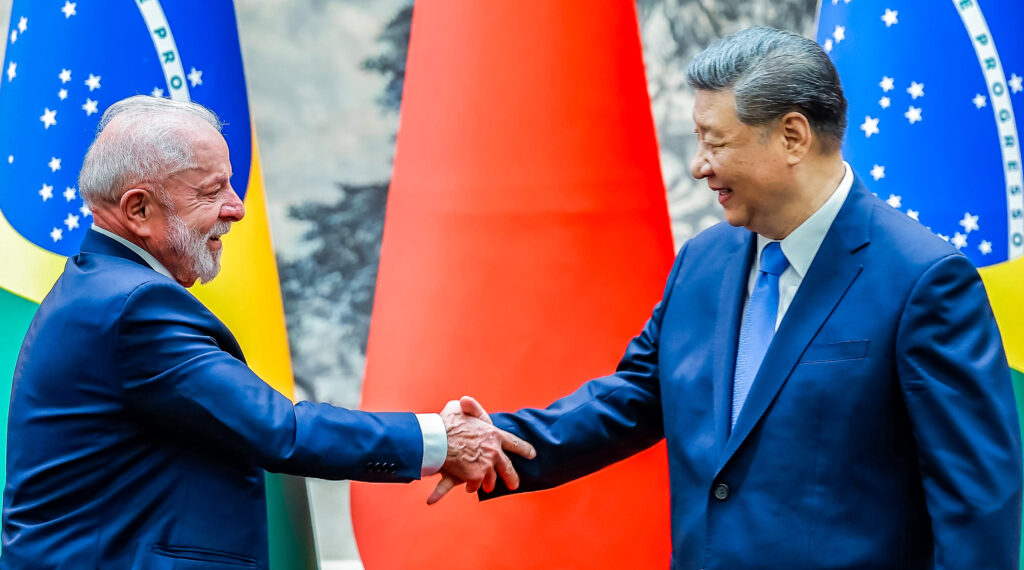
Roberto Uchôa de Oliveira Santos, public security specialist and former employee of the civil and federal police forces in Brazil, highlighted that Brazilian President Luiz Inácio Lula da Silva and U.S. President Donald Trump have had talks about collaborating over the issues of illicit firearm flows and money laundering, which Lula reiterated on X on March 18.
Uchôa de Oliveira Santos told Brazil Reports that while it is important for “governments to work together across the region, [the designation is] not understood as an act of partnership” on the part of the Brazilian government. Rather, it is interpreted as a form of “geopolitical pressure” with dubious benefits.
He added that “it is not the objective of President Trump to fight criminal organizations” in Brazil. In fact, he believes this narrative conceals the U.S.’s hidden agenda. Conceding to his pressure, he added, would be a “huge mistake”; the extent of criminal governance, whereby criminal groups can control the police, judiciary, prosecutor’s office and political actors is “a virus”.
Curbing the power of transnational crime groups such as the Primeiro Comando da Capital (PCC) and CV requires more than Trump’s designation and military-led strategy which tends to follow, the expert added.
While outlining that “improved communications and intelligence” would upgrade security operations like Rio’s raids, Uchôa de Oliveira Santos wrote in The Conversation that there is no evidence that U.S. methods work.
Labelling organizations driven by illicit market profits as terrorists overlooks the fundamental networking nature of groups like the PCC and CV, according to Dr. Guadalupe Correa-Cabrera, professor at the Schar School of Policy and Government; in the end, these groups adapt to market opportunities.
Uchôa de Oliveira Santos highlighted how, contrary to contemporary organizations which utilize spectacles of power to incite fear, the PCC uses forms of pragmatic violence – which often fall under the radar.
“Instead of fighting the State, [the groups are allowed] to penetrate violence within the mechanism of the State,” Uchôa de Oliveira Santos added. The PCC, for example, bribed and co-opted policemen to murder of businessman Antonio Vinicius Gritzbach on their behalf in November 2024.
Others decry the FTO designation could serve as a pretext for the U.S.’s CIA or FBI to enter Brazil, which would be an affront to their national sovereignty.
Brazil remains resistant to following the example of Ecuador, where President Daniel Noboa recently invited the establishment of an FBI office on their sovereign territory.
Read more: Colombia’s Petro accuses Ecuador of bombing near border
Mario Sarrubbo, former São Paulo prosecutor-general, explained to Valor International: “The move to declare them terrorists would only make the country vulnerable internationally to economic embargoes and even territorial violations, which would be unreasonable under any circumstances.”
FTO designations and Brazil’s upcoming elections
Geopolitical conditions have compounded on the Rio raids, creating a more partisan landscape of opinion on Brazil’s security – which is already a concern to emotive voters.
Governor Castro called the raid a “success”, and has since aligned with the hard-handed policy of the Trump administration. Greater support from the Armed Forces, he said, is needed to protect Rio.
Meanwhile, Tarcísio de Freitas, Republicanos Party member and Governor of São Paulo, stated that a potential FTO designation is an “opportunity” for Brazil on March 11.
“From the moment that a government like the U.S. sees the PCC as a terrorist organization – which is in fact what they are – it is easier to open the way for cooperation, integrate intelligence, access financial resources and structure an even more effective fight,” said Freitas.
Uchôa de Oliveira Santos, however, challenged how effective security policy aligned with the FTO designation could be. The expert sees the designation as a form of geopolitical pressure under Trump’s so-called “Donroe Doctrine.”
With Brazilian general elections approaching on October 4, 2026, there is concern that the designation could become a domestic political weapon in a country which is already deeply polarized: right-wing candidates may embrace it as validation for harder security policies, while the Lula government faces the dilemma of appearing either soft on crime or subservient to Washington.
Amidst the clamour, dealing with the potential threats posed by the PCC and CV fades into the background of political debate. As Uchôa de Oliveira Santos suggests, the profit-driven, entrepreneurial, and resilient nature of these criminal groups would be overlooked if they were to be designated as FTOs.
Featured image: Civil police officers from the Robbery and Theft of Cargo Division during Operation Containment
Source: Wikimedia Commons
Author: CanalGov
Creative Commons Licenses