

A 12.5% United States tariff on all Brazilian goods came into effect today just days after the White House slapped a 25% levy on a range of exports from the South American country.
Washington has accused Brazil of unfair trade practices toward U.S. companies and poor enforcement of ‘forced labor’ standards.
The 25% tariffs target goods including furniture, ethanol, machinery, footwear and sugar while the 12.5% levy – also applied to 59 other countries – is universal.
The Office of the U.S. Trade Representative concluded after a yearlong investigation that Brazil had a range of trade practices it considered unfair, such as lax anti-corruption enforcement and questionable individual tariffs.
While the U.S and Brazil have sustained a goods trade surplus for years, U.S. Trade Representative Jamieson Greer said in a statement last week that the action was necessary to ensure U.S. workers and companies compete on a level playing field.
“Extensive negotiations with Brazil over the past year have not resolved these issues, but we remain open to continuing negotiations with Brazil to bring about long-needed changes to the problems identified in this investigation,” he said.
The tariffs stem from the investigation launched under Section 301 of the Trade Act of 1974, which authorizes the U.S. to investigate and respond to foreign trade practices it deems unfair or harmful to its commerce.
Brazil has also been included in a separate Section 301 investigation by the USTR into allegations of forced labor in the supply chains of 60 countries, resulting in the additional 12.5% tariff which takes Brazil’s tariff burden to 37.5% for certain goods.
The order exempts some goods that are not produced in the U.S. or that officials worry would disrupt supply chains, such as coffee, beef, oranges and orange juice, some oil and gas energy products, and aerospace parts and components.
Secretary of State Marco Rubio defended the move, saying President Luiz Inácio Lula da Silva “has not negotiated with the U.S. in good faith” and arguing that his policies “are bad for Americans and bad for Brazilians.”
A few months ago, the International Emergency Economic Powers Act (IEEPA) aimed to impose a 50% tariff on Brazil, which Trump had linked to Brazil’s prosecution of former President Jair Bolsonaro, but was blocked after the U.S. Supreme Court ruled that the administration had exceeded its authority under that law.
After U.S. officials warned in early June of the new tariff, Brazilian President Lula da Silva said the move was political, blaming his rival in the October elections, Senator Flávio Bolsonaro, who recently visited Washington, and whose father, former President Jair Bolsonaro, was an ally of President Donald Trump.
Less than 24 hours after tariffs were imposed, Bolsonaro wrote on his X account that, “after much provocation and effort by the Brazilian Government, today a new tariff war against Brazil began to take effect. Unfortunately, Lula dug this penalty.”
In Brazil, the press, authorities and politicians call Donald Trump’s government’s tax policy “tarifaço” – a massive tariff hike.
Bolsonaro also said he “has full conviction” that, should he be elected president of Brazil in the October elections, he will manage to reverse the tariffs, and called the PT the “Party of the Tariff War.”
The PT, in turn, announced it will launch the campaign “Brazil Does Not Give Up” in response to Washington’s tariffs and, in a statement, accused the Bolsonaro family of encouraging the measure.
“The attacks promoted by the United States against the Brazilian economy, encouraged by the Bolsonaro family, demonstrate that there are those willing to place political and personal interests above the interests of the country,” the statement reads.
Lula’s party also stated that the campaign will be run on social media with content defending the importance of the Pix electronic payment system, national industry, rare earths and Brazil’s strategic mineral wealth.
“We will speak directly with the population about the impacts of the attacks on the Brazilian economy and reaffirm a central message: Brazil owns its own destiny and does not accept anyone deciding its future in its place,” it added.
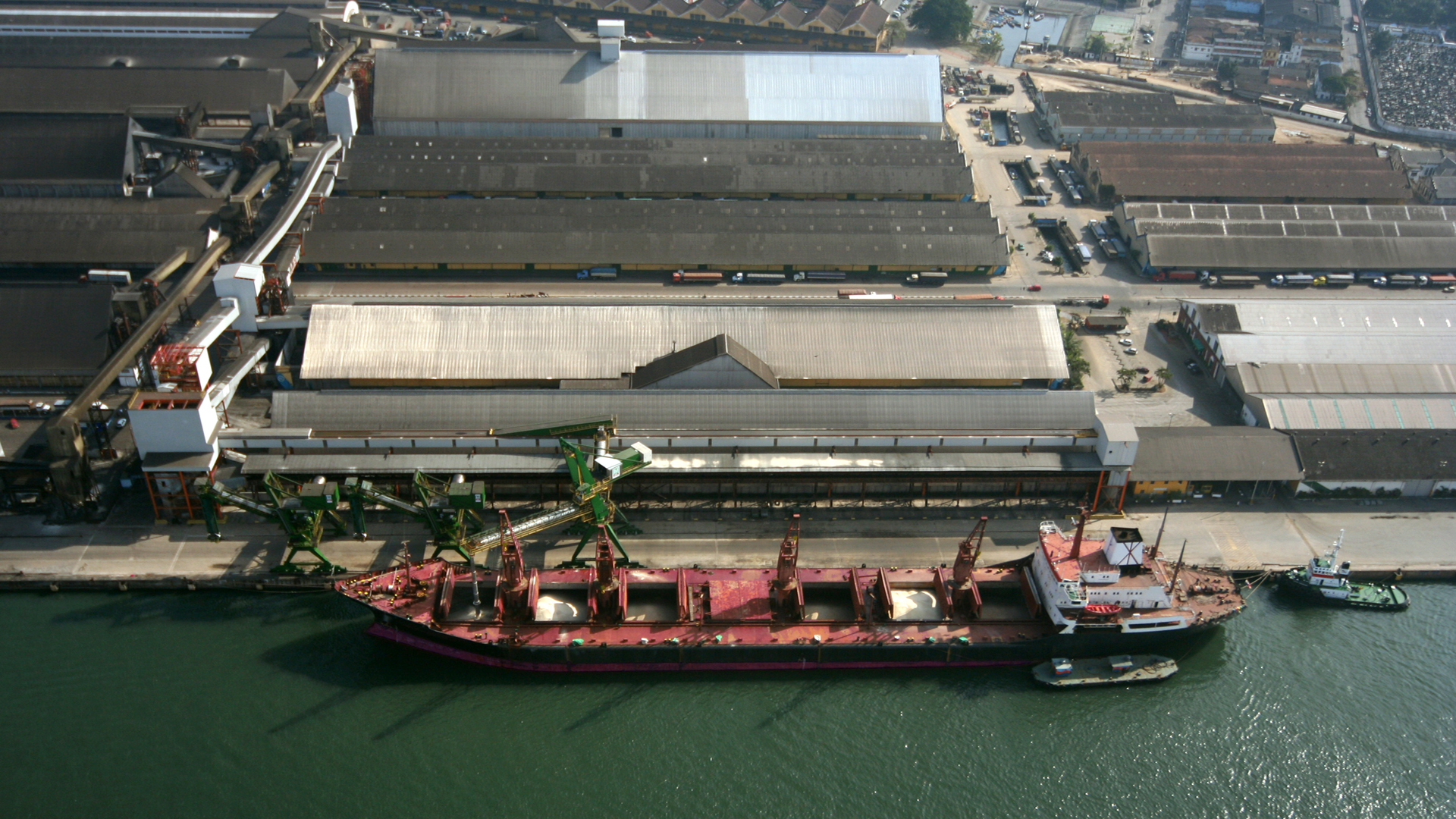
Featured image description: Export of bulk vegetables in Santos Port, Brazil.
Featured image credit: Sabino Freitas Correa via Wikimedia Commons